
Morrow County Release Date Types
A projected date is an administrative forecast. It may draw from the judgment, sentence start, credit for time already served, consecutive or concurrent terms, mandatory minimums, earned-time eligibility, awarded credits, lost or restored credits, and Board action. An actual release date records the event after it occurred. The two should never be used as if they mean the same thing.
Custody stage changes the answer. A person awaiting trial usually has no sentence-based release date. Exit can depend on bond, recognizance, a court order, case disposition, or transfer. A person serving a local sentence may have a jail calculation tied to the Morrow judgment. A person committed to Oregon DOC has a state sentence computation and may later be subject to post-prison supervision.
| Date or event | What it means | Best source |
|---|---|---|
| Projected date | A forecast based on the current sentence computation | DOC record or the responsible jail |
| Board projected parole date | A term used in certain Board cases | The Board order |
| Actual jail release | The time a county booking ended | Umatilla booking and release transaction |
| Actual prison release | The recorded end of institutional DOC custody | DOC release record |
Find Morrow County Release Dates
There is no Morrow County jail building. Morrow detainees are physically held at Umatilla County Corrections Facility in Pendleton. That arrangement creates a clear division: the Morrow court supplies the case judgment, while Umatilla is the jail custodian that can explain a local custody calculation and document the actual exit.
- Confirm the person, Morrow case number, booking, and present custodian. Do not begin with a date detached from a specific record.
- Read the Morrow County Circuit Court judgment. Identify whether the person is pretrial, serving a local term, or committed to Oregon DOC.
- For local jail custody, call Umatilla at 541-966-3632 and ask which public record provides the current expected date. Request the booking and release transaction for an event that already occurred.
- For an Oregon prison sentence, search by name or SID in Oregon Offender Search. Copy the exact date and status labels displayed on the current profile.
- If a state result is unclear or absent after intake, request the relevant DOC face sheet, sentence, movement, and release portions.
- Use VISOR for a pending custody-change notice, then verify the notice with Umatilla or DOC.
The broader Morrow County released-inmate search explains how to reconcile jail records, court disposition, supervision, and transfer records after the expected date passes.
Note: Record the date and time of every online check, since a profile or current-custody roster can change after processing.
Oregon Release Dates for Morrow
The Oregon Offender Search is the state path for a person committed to Oregon DOC. It is not the primary source for a short county-jail stay. Morrow’s own custody route sends a prison-sentenced person from Umatilla to Coffee Creek for intake, then to the institution selected by DOC. At that point, a county roster no longer controls the person’s custody status.
Accept the portal terms, search by full or partial name or SID, and compare identifiers before opening a profile. Write down the exact status, institution or supervision information, and any date label shown. The research did not verify that every former-offender profile displays an actual release date, nor that the same label appears in every record. Do not promise a field the live result does not show.
The live Oregon Offender Search shows the verified search controls.
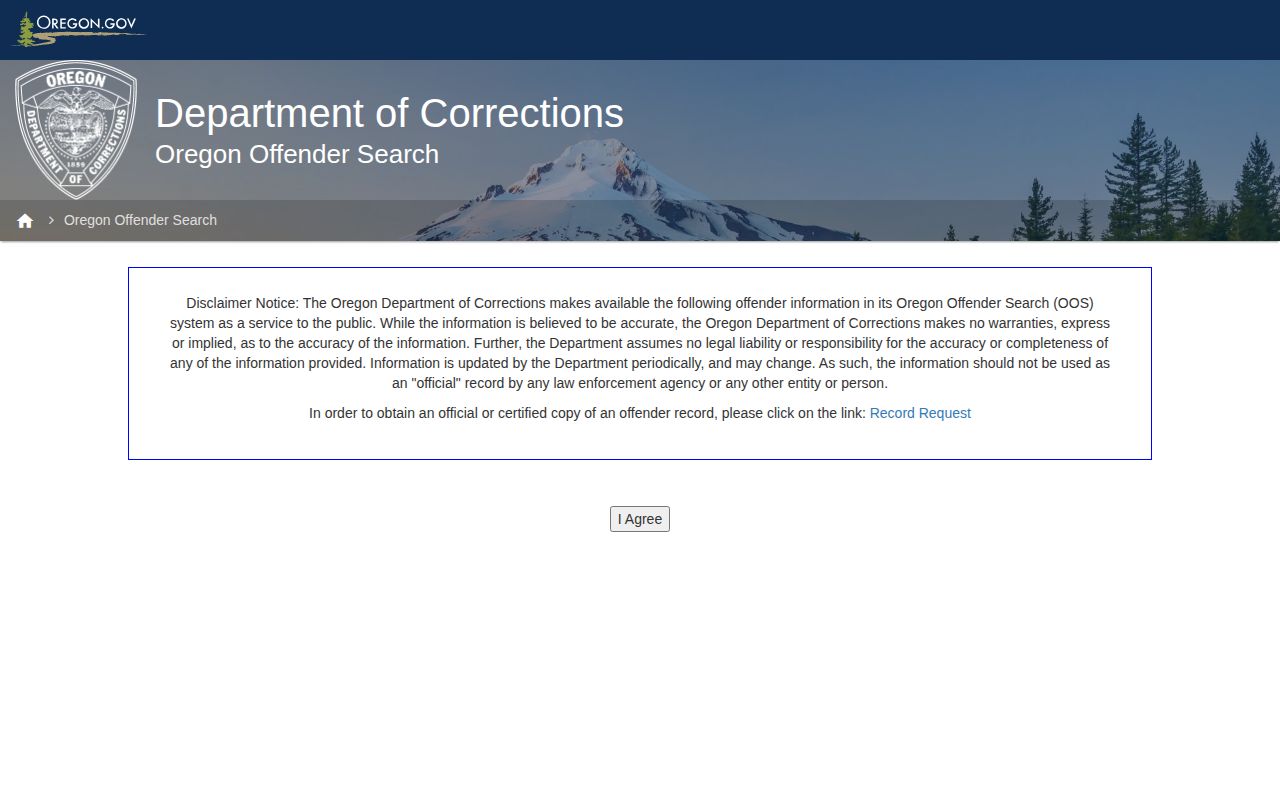
This captured state search supports name and identifier lookup without assuming a universal result label.
A new DOC intake may not appear at once. Retry after processing or contact DOC. Absence may stem from spelling, identifier, eligibility, privacy, or data timing. A move from Coffee Creek to another prison is an internal transfer, not release.
Morrow County Earned-Time Rules
Oregon does not have an honest one-size release formula. Under ORS 421.121, qualifying adults in DOC custody may earn term reductions based on appropriate institutional behavior and basic-skills participation. The statutory maximum does not exceed 20 percent of total DOC incarceration, and credits cannot reduce actual confinement below six months. DOC rules govern award, loss, and restoration.
“Up to 20 percent” is a ceiling, not a promise. It does not prove that a person will serve exactly 80 percent. Oregon also should not be described as a blanket 85 percent state. The judgment and offense statutes may impose different limits or bar a reduction during a mandatory term.
ORS 137.635 permits certain definite determinate sentences that bar parole, temporary leave, and specified term reductions. ORS 137.700 Measure 11 minimums prohibit release and reduction during the mandatory minimum for covered offenses. Other offense, age, date, and homicide provisions can also change eligibility. Read the actual judgment and the law that governed the offense date.
- Earned time
- A sentence reduction that must be awarded under applicable law and DOC rules, not an automatic deduction.
- Mandatory minimum
- A required confinement period during which listed release or reduction options may be barred.
- Jail credit
- Credit recognized for qualifying time already spent in custody.
- Concurrent terms
- Terms that run together when the judgment says so.
- Consecutive terms
- Terms that run one after another under the judgment.
No official source reviewed supplied a Morrow or Umatilla local-jail good-time formula. Do not apply the DOC ceiling to a local term. Ask the jail and read the judgment instead.
Is Oregon an 85% State?
No blanket 85 percent rule accurately describes every Oregon sentence. The general DOC earned-time provision uses a maximum reduction of 20 percent for qualifying adults, with a floor on actual confinement and rules for award or loss. Determinate terms, Measure 11 minimums, and other exceptions can block or narrow that reduction. The correct calculation begins with the individual judgment.
Board cases add another layer. In cases governed by the parole framework, a Prison Term hearing can set a “projected parole release date” or decline to set one under the law applicable to the commitment offense. An Exit Interview may affirm or defer that date. A Parole Postponement hearing may extend it for serious institutional misconduct.
The Board’s hearing information describes these event types. Its projected parole phrase belongs to Board procedure and should not be borrowed as a supposed Oregon Offender Search field. The Board reports that a misconduct extension can range from 5 to 100 percent of the prison term, subject to a five-year cap, with escape or inoperative time added. Only the individual order states what happened in a case.
This Oregon-specific mix is why a simple sentence-length percentage can mislead. A date printed before a hearing or credit decision is a current forecast. It may move when the controlling computation changes.
Why Morrow Release Dates Change
A date can move for legal, administrative, or custody reasons. Some changes shorten a forecast, while others delay it or reveal that a different authority controls the next step. The person’s case and custody record must show which factor actually applies.
| Factor | Possible effect | Record to check |
|---|---|---|
| Jail-credit recalculation | Changes time credited toward the sentence | Judgment and custodian computation |
| Earned-time award or loss | Moves a DOC forecast within governing limits | DOC sentence record |
| Consecutive sentence | Adds a term that runs after another | Filed judgment |
| Detainer or hold | May cause transfer to another custodian | Release disposition and receiving-agency record |
| New court order or appeal | Can alter the legal basis or calculation | Court docket and signed order |
| Board decision | May set, defer, affirm, or postpone a parole date | Individual Board order |
A detainer is a request or authority affecting the next custody step. It can mean that the person leaves Umatilla or a DOC institution but enters another agency’s control. The first agency’s departure date is not proof of community release.
No sourced rule established that Morrow, Umatilla, or DOC automatically moves a Sunday or holiday date in a specific direction. Do not shift a date based on a general assumption. Ask the responsible custodian.
Confirm Morrow County Release Dates
For an event that already occurred at Umatilla jail, request the booking and release transaction. It should tie the date and disposition to the correct booking. Ask whether the person entered the community or transferred to DOC, another jail, federal custody, or immigration custody. Morrow’s prisoner-tracking record can help with a county detainee, but Umatilla created the jail record.
For DOC, the public-records process is the documentary fallback. Ask for the face sheet or specific portions showing admission, sentence computation, legal release, discharge, supervision, and movements. The Former Offender Records contact can assist when a public profile is insufficient. A DOC Pen Pack may contain public-information prints, face sheets, judgments, a photo, and sometimes parole-discharge documents, but request only what the date question requires.
For a pending event, register through Oregon VISOR. The Morrow County VINE inmate check explains the current VISOR search and alert process. When notice arrives, call the custodian. VISOR does not promise a certified release date or permanent historical display.
Keep the projected record and the later actual record together. The first shows what was expected at that point. The second documents what happened. If they differ, the judgment, sentence computation, Board order, or transfer record should explain why.
For a Morrow Circuit Court file, inspect the judgment, custody-credit terms, later orders, and the Register of Actions. Online case information can help locate those filings, but the Oregon Judicial Department warns that an online entry is not itself the official court record. Obtain the filed order when a legal change appears to have moved the date. A court disposition may explain why the jail acted, while the jail or DOC record documents when physical custody actually ended.
Note: Release from confinement may begin parole, probation, or post-prison supervision, so it does not always mark full sentence discharge.